
Sustainable Transition with AI
STAI 2025
AI for Climate Action
July 4 (Fri) – July 10 (Thu), 2025
STAI
ABOUT
About Sustainable Transition with AI (STAI)
The Sustainable Transition with AI (STAI) group is an interdisciplinary research and education community jointly formed by researchers from Korea Advanced Institute of Science and Technology (KAIST), Cheju Halla University, and Stanford University. Our mission is to address sustainability challenges through the integration and advancement of Artificial Intelligence (AI) technologies.
STAI 2025 Initiative, hosted by the Ministry of Education, Jeju Special Self-Governing Province, Jeju RISE Center, and Cheju Halla University, specifically aims to empower undergraduate and graduate students in Korea by fostering innovative ideas and entrepreneurship that leverage AI and climate technologies for sustainable transitions in social infrastructure.
Our Track Record
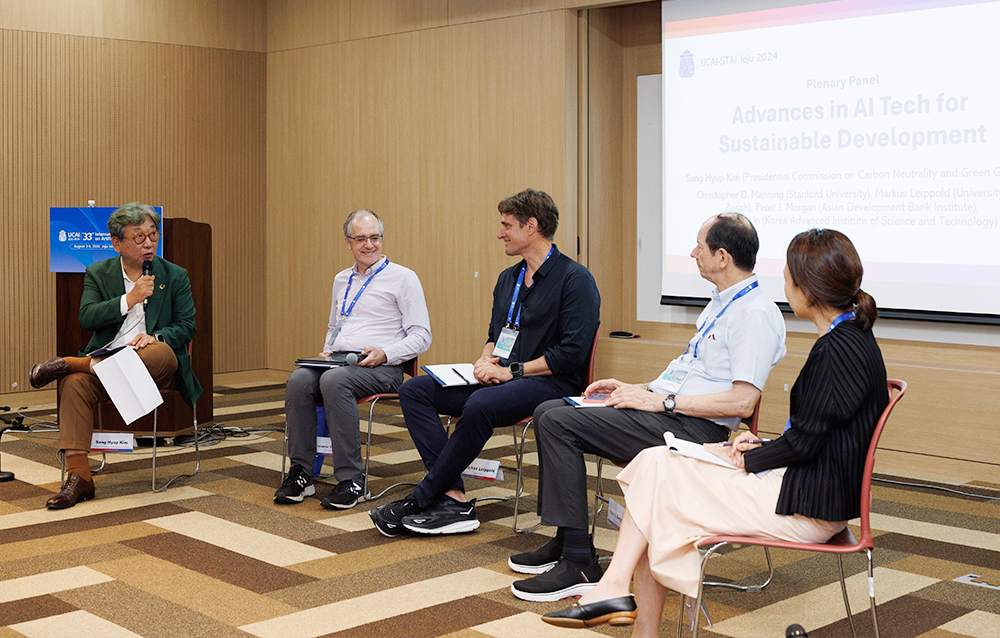
In 2024, the STAI group successfully hosted its inaugural workshop at the prestigious International Joint Conference on Artificial Intelligence (IJCAI) in Jeju. This event facilitated knowledge sharing on cutting-edge research trends in sustainability and AI, while strengthening collaborative networks between academia, industry, and research institutes, including participants from Microsoft Research and Google DeepMind. Over 50 researchers and students attended, contributing to eight peer-reviewed research presentations and an interactive poster session. Keynote speakers included renowned experts such as Prof. Chris Manning (Stanford University), Prof. Markus Leopold (University of Zurich), and Dr. Peter Morgan (Asian Development Bank Institute), who shared insights on impactful AI applications for sustainability. The workshop received significant media attention, including coverage by major outlets like Maeil Business Newspaper (see the news article).
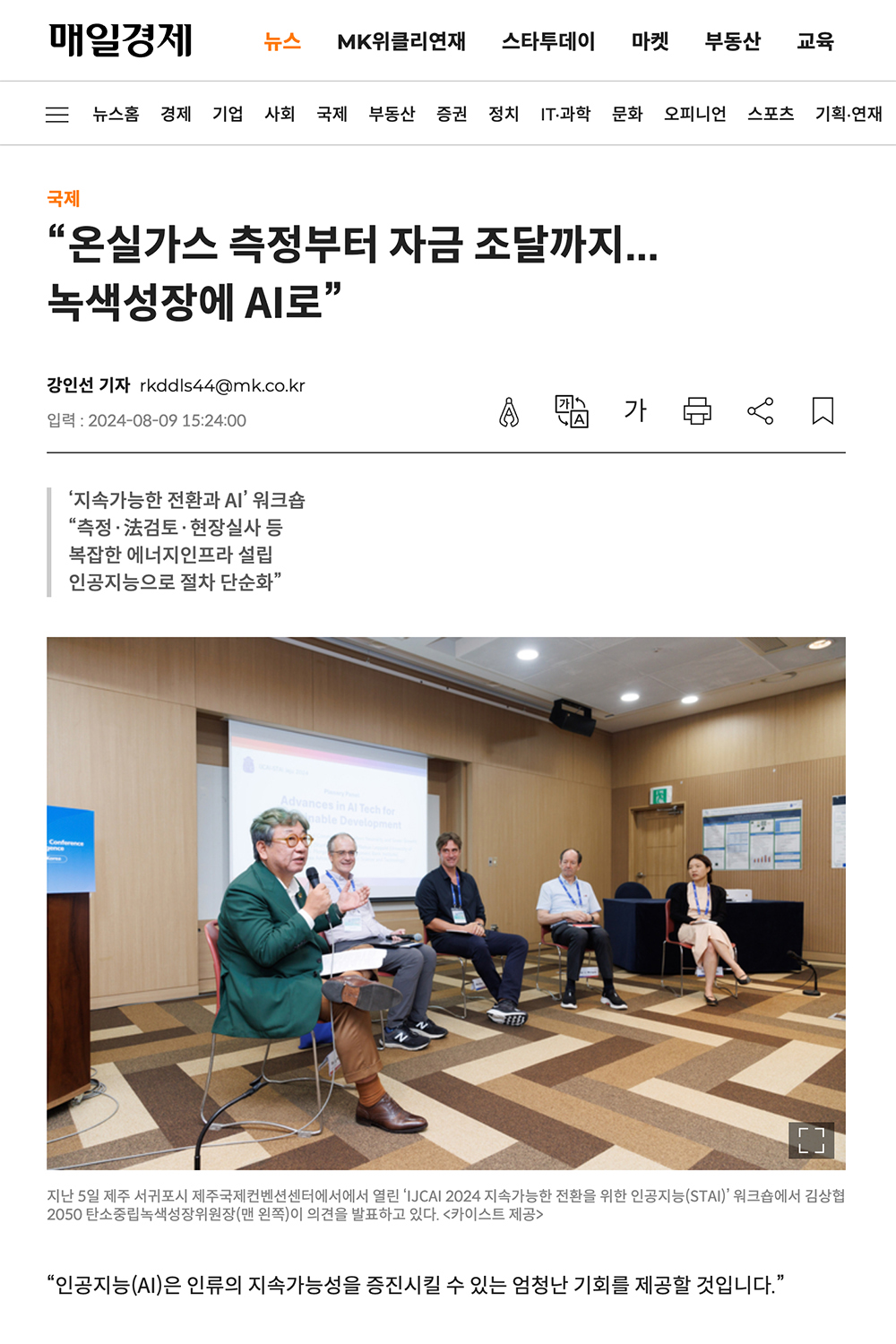
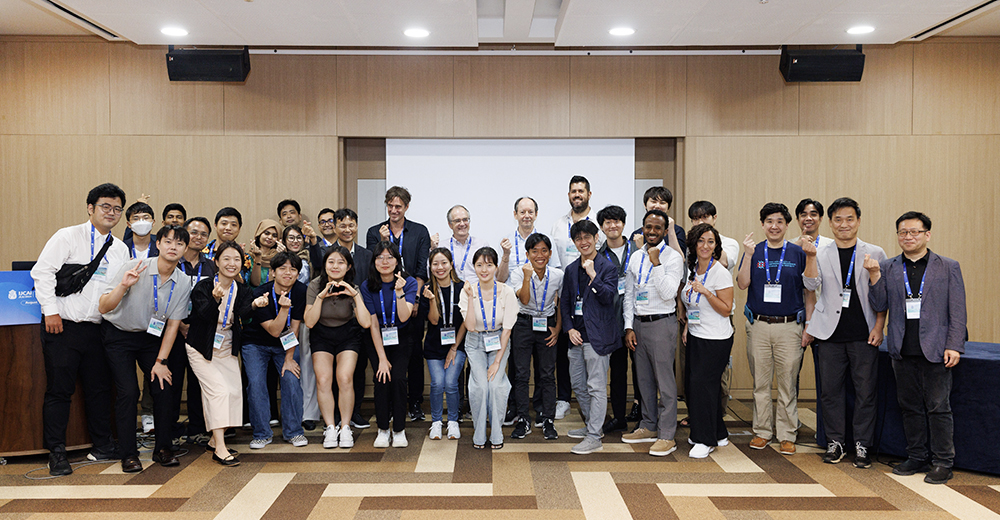
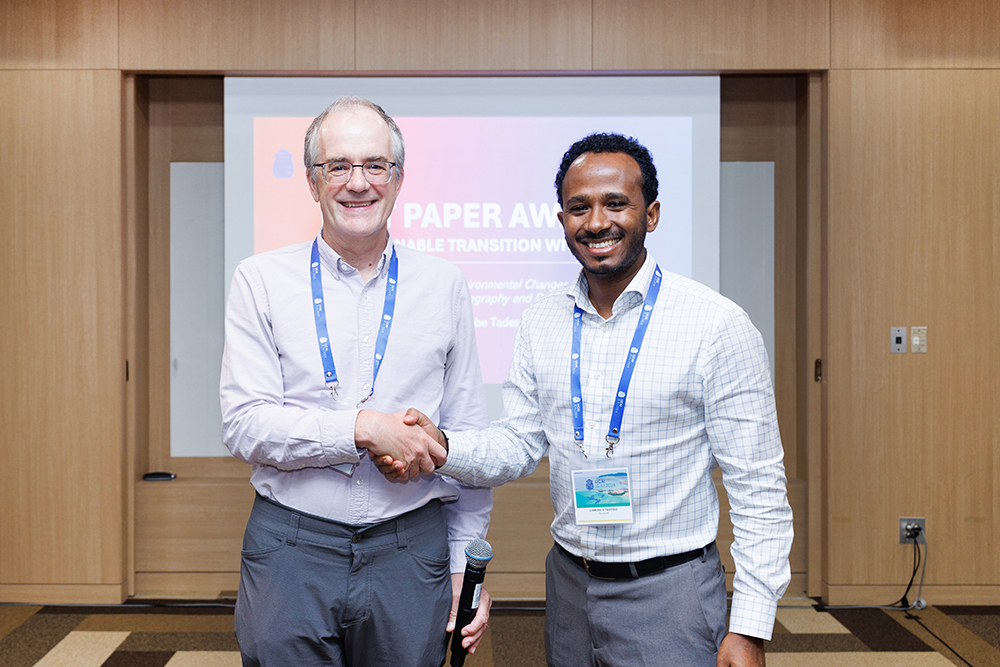
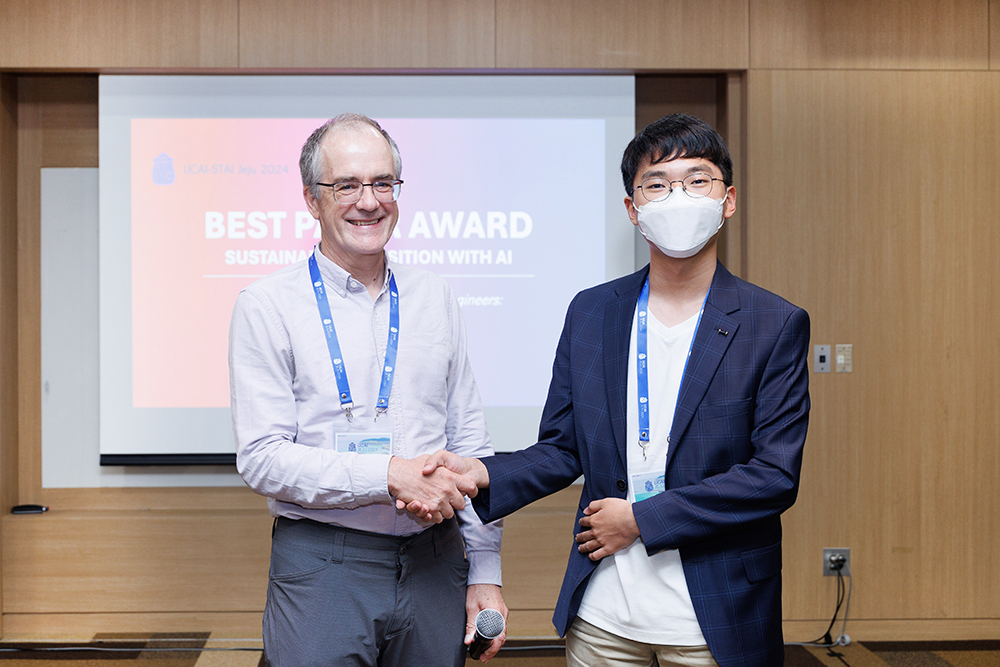
[ winners from STAI 2024 ]
STAI 2025
STAI 2025: "AI for Climate Action, Innovation for the Future"
The STAI 2025 invites students to harness AI and climate technology to devise innovative, actionable solutions aimed at building sustainable infrastructure. The event facilitates the practical development of these solutions into entrepreneurial ventures.
Participants will have numerous opportunities for learning and recognition, including expert-led workshops, hands-on AWS training sessions, specialized mentoring, and field experiences. Outstanding teams will be awarded, with continued mentorship and support provided to nurture their ideas into viable business opportunities.
Join future leaders in AI and sustainability for an intensive 7-day journey of innovation, collaboration, and growth. Gain hands-on experience with AI technologies, engage with global experts, and connect with like-minded students and professionals who are shaping the future of climate action through AI.
- DATE : July 4 (Fri) – July 10 (Thu), 2025
- Venue : KumhoWorld Education Center, Cheju Halla University / Halla Hall, Amber Pure Hill Hotel
- Participants : 30 selected undergraduate and graduate students from Korea and abroad
- Linked Program : Participation in the KOICA "AI for Climate Action Award" Global Competition
STAI 2025
Goals and Objectives
This year’s hackathon is centered around the theme “AI for Climate Action” and features two main tracks:
Track 1 – Korea-Focused Challenges
- Heatwave response and agricultural adaptation
- Mental health and climate vulnerability
- Enhancing urban-rural climate resilience and infrastructure
Track 2 – Global South & Climate-Vulnerable Nations (LDCs/SIDS)
- Smart agriculture, disease response, and support for climate refugees
- Low-power AI for sea level rise monitoring and decentralized energy access
2025 STAI HACKATHON
| Main Theme | AI for Climate Action | |
|---|---|---|
| Track 1: Korea-Focused Challenges | AI for Climate Resilience in Korean Society | |
| Responding to Climate-Driven Social Crises |
| |
| Enhancing Urban & Rural Climate Resilience |
| |
| Track 2: Developing Countries (LDCs/SIDS) | AI for Global South & Climate-Vulnerable Nations | |
| Building Climate Resilience in LDCs |
| |
| Low-Power AI for Small Island Developing States (SIDS) |
| |
STAI 2025
Agenda
01
Keynote Speech: "AI for Climate Action"
- Prof. Young Joon Lee, Cheju Halla University
02
Expert Lectures
- Lecture 1: Intelligent Transportation Network Analysis (Prof. Jinwoo Lee, KAIST)
- Lecture 2: Infrastructure Investment Models & Climate Risk (Prof. Soh Young In, KAIST)
- Lecture 3: GIS-Based Sustainable Urban Planning (Prof. Albert Tonghoon Han, KAIST)
- Lecture 4: Infrastructure Social·Environmental Impact Assessment (Prof. Hiba Baroud, Vanderbilt University)
- Lecture 5: RAG & Vector Databases (Prof. Sanghyun Park, Yonsei University)
- Lecture 6: Sustainable AI Agents and Social and Ethical Responses to Generative AI (Dr. Jaieun Kim, Saltlux, Director/Head of AI Labs)
03
AWS Special Programs
- Pre-Program Online Course: Fundamentals of AWS Cloud
- AWS Hackathon Orientation (Jaeman Park, AWS Partner) – 30 minutes
- AWS Lecture I: Introduction to AWS Cloud and Basic Architecture (AWS Solutions Architect) – 3 hours
- AWS Lecture II: AWS AI/ML Services and Developing with Open-Source AI Tools (AWS Solutions Architect) – 4 hours
- Amazon “Working Backwards” Workshop: Hands-on PR/FAQ Methodology (Youngeun Lee, AWS) – 4 hours
04
Project Mentoring
- Proposal Mentoring: Feedback on business feasibility and technical approach
- Ongoing Mentoring: Online technical support (phone, Zoom, or text)
- Final Presentation Mentoring: Practice and refinement of presentations
05
Site Visit
- Visit to the National Institute of Meteorological Sciences
– Introduction to the Climate Change Prediction Team and the AI Meteorology Division
06
Research Proposal Competition (Hackathon) and Awards
- Final Presentations on Day 7
- Evaluation by Judging Panel (including AWS judges)
- Award Ceremony (featuring an AWS Special Award)




STAI 2025
Contact
Email kyh223@chu.ac.kr
Previous Events
STAI 2024
- Hosted by
- Ministry of Education, Jeju Special Self-Governing Province, Jeju RISE Center, Cheju Halla University
- Organized by
- Cheju Halla University RISE Center, KAIST, Yonsei University
- Partners
- AWS, Saltlux
- Sponsor
- The Asan Nanum Foundation